
How Innovative Finance Can Drive Better Nutrition Outcomes in Africa
19 August 2025Many African countries are grappling with the triple burden of malnutrition, a complex challenge with far-reaching health and development consequences that affects millions across the continent. According to the World Health Organization, among the 150.2 million children under 5 with stunting globally, 43% live in African countries. Similarly, of the 42.8 million children under 5 with severe wasting globally, 22% are in Africa. At the same time, the continent is experiencing a rise in childhood obesity, with more than one-quarter of all children under five affected by overweight residing in Africa. The State of Food Security and Nutrition in the World Report (SOFI) 2025 revealed that 307 million Africans faced hunger and 1 billion Africans were unable to afford a healthy diet in 2024. By 2030, about 60 percent (307 million) of chronically undernourished people in the world will be in Africa. The stark realities highlighted by these data underscore the urgent need for innovative and coordinated approaches to addressing these pressing socio-economic challenges.
Data from ATNi’s latest Global Index and country assessments show that in low- and middle-income countries — including many in Africa — food and beverage companies tend to offer fewer healthy options in their product ranges/portfolios. According to ATNi’s East Africa Market Assessment, the first independent regional assessment of the healthiness of product portfolios and corporate profiles of 51 major food and beverage companies in Tanzania and Kenya, the overall healthiness of packaged food on offer in these markets is low. Results from the Health Star Rating (HSR) assessment showed that just 25% of products assessed in Tanzania met the ‘healthy’ threshold of 3.5 out of 5.0 stars. In Kenya, only 33% of 746 products meet the ‘healthy’ threshold (≥3.5 stars) under HSR.
To reverse the trend and improve nutrition in Africa, there are myriads of challenges on the continent, causing food insecurity and consequently leading to nutrition insecurity including but not limited to infrastructure, logistical challenges, and lack of access to finance and digital technology. What is the low-hanging fruit that can address the root of many of these problems? What has been mentioned by many in various forums? Access to finance. According to the World Bank, a whopping $34 billion is needed to address undernutrition across Sub-Saharan Africa. To address the issue of access to finance, it is necessary to adopt innovative financing solutions in conjunction with traditional investments.
Defining Innovative Finance
Innovative finance refers to a range of non-traditional mechanisms used to raise funds for development projects. It helps to bridge gaps in development financing, bringing additional sources of funding and unlocking the potential of existing capital to accelerate and increase impact. Innovative financing sources such as sovereign wealth funds, blended finance, impact investing, and environmental, social, and governance (ESG) investing offer promising pathways to bridge the nutrition funding gap on the continent. Evidence shows that nutrition-sensitive investments could yield substantial economic and social returns. With every $1 invested in addressing undernutrition, a return of $23 could be generated. Directing impact capital toward nutrition-focused solutions, including healthier food production, food fortification, sustainable food systems, and innovative packaging and supply chain models, can drive both financial and social impact across the continent.
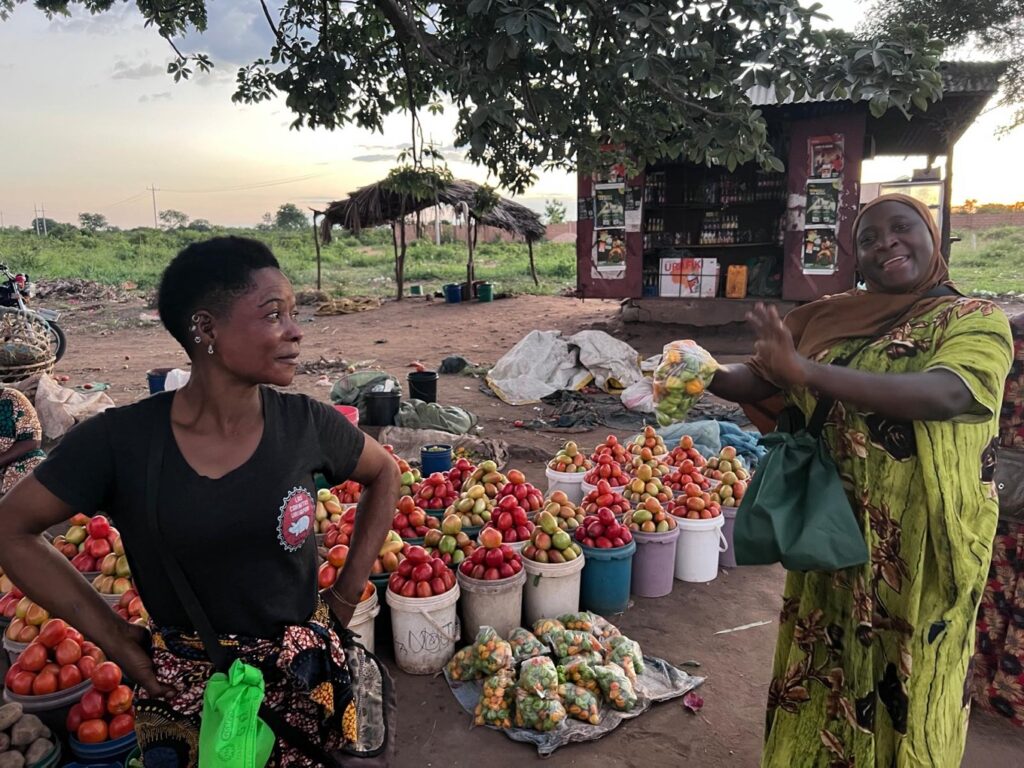
As Official Development Assistance declines, African governments must lead the process to rethink the nutrition financing in the current system. Fiscal and regulatory policies that support impact investment in nutritious food enterprises and other supporting policies must be enacted to ensure accessibility and affordability of nutritious food. For example, governments can repurpose existing agrifood subsidies for investment in national food companies producing healthy diets and comply with national food and nutrition standards. One of the most widely used subsidies in Africa is the Agricultural Input Subsidy Programme. While implemented across 12 African countries to improve African food production, this subsidy has been criticized for failing to achieve this objective About 600 million to 1 billion USD per year is expended on the subsidy, and despite this, the countries’ food importation bills keep increasing. Instead, these subsidies could be repurposed to fund national companies using a blended finance approach.
Innovative Finance Driving Impact
One impressive example was the launch of the Ghana Venture Capital and Private Equity Compact which directed pension and insurance funds to allocate at least 5% of their assets under management (AUM) to venture capital and private equity firms by 2026 to stimulate long-term financing for small and medium-sized enterprises (SMEs) and high-growth sectors. This is an innovative financing approach for national economic transformation, and such a policy directive could be used by governments in directing capital towards the production of healthy and nutritious foods, a major driver for future economic transformation.
There are good examples of impact investments targeted at ensuring food security on the continent, such as the Africa Food Security Fund and Good Food Innovation Fund. However, some of these investments focus more on primary production, agricultural inputs, and service providers without a specific focus or requirement on how investees contribute specifically to improved nutrition. The risk is that without intentionally integrating nutrition as a core component of these investments, its potential impact is often overlooked or entirely missed. A pioneering fund focused on nutrition is the Nutritious Food Financing Facility (N3F), hosted by Incofin Investment Management. N3F aims to increase access to safe, nutritious, and affordable food for low-income populations in Sub-Saharan Africa by providing financing and technical assistance to SMEs in the food sector.
Another example is UNITLIFE Trust Fund, an innovative funding fund hosted by the UN Capital Development Fund (UNCDF). This is a pioneering initiative to address chronic malnutrition through innovative financial mechanisms, including voluntary micro-donations, blockchain fundraising, crowdsourcing, and public–private partnerships. It supports women’s empowerment, climate-smart agriculture, and resilient, nutrition-sensitive food through biofortified seeds, livestock initiatives, and nutrition education.
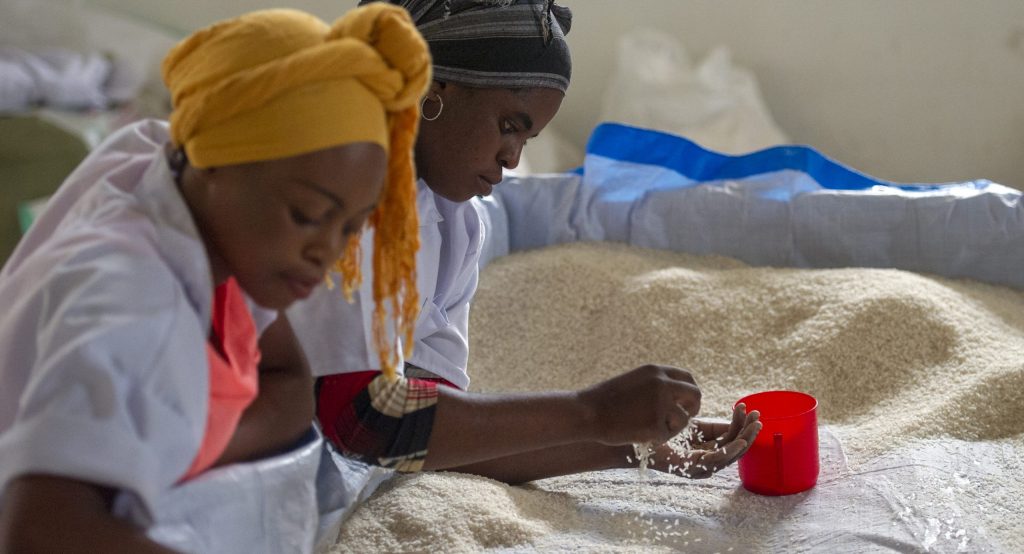
To improve nutrition at scale and drive nutrition outcomes, there is a need to create a strong coordination (formal or informal) among key actors across policy, finance, and nutritious food value chains. One of the ways to build this is to create guidelines for investors, donors, and the private sector willing to invest in nutrition. ATNi has developed the first draft of the Nutrition Impact Investing Principles, which provides guidelines on how these stakeholders can navigate impact investing in nutritious food production. There is presently no standardized way of defining what qualifies as impact investing in nutrition. There are also no well-defined metrics for measuring the impact of these investments.
ATNi is currently leading a multi-stakeholder research process to align on the inclusion and exclusion criteria for what qualifies as impact investing in nutrition. This alignment initiative includes harmonizing existing metrics to help guide donors, impact investors, development finance institutions, asset managers, and institutional investors to align current agri-food investments for nutrition and allocate additional resources for nutrition impact. To build a healthy and sustainable food system, nutrition must be treated as a core investment theme — not something that can be addressed merely by investing in food security initiatives. We must invest strategically in nutrition security to be able to address the triple burden of malnutrition on the African continent. At ATNi, we will continue pushing for the inclusion of nutrition in impact investing as a pathway towards improving capital flows to build a healthy and sustainable food system for all.