
ATNi publishes the first VitaMin Premix Supplier Assessment
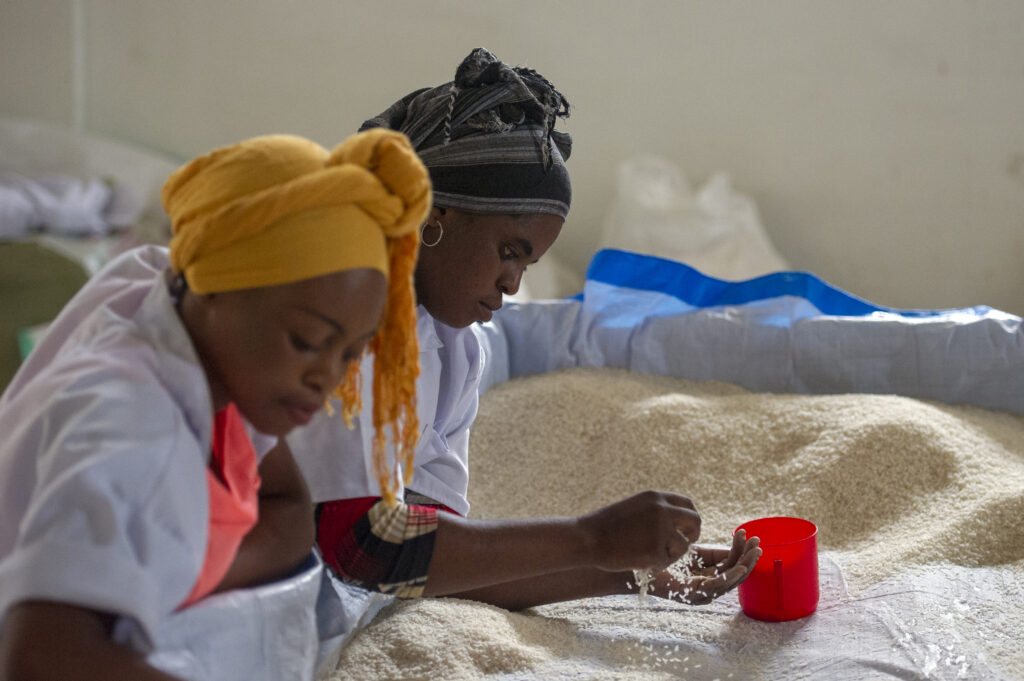
30 September 2025Fortification plays a key role in improving nutrition outcomes for billions of individuals around the world, every day. While 143 countries have fortification standards for at least one staple food, compliance remains low due to limited access to quality fortifcants (micronutrients and premixes) and insufficient technical capacity to adequately fortify. Fortificant producers have a key opportunity to strengthen the fortification value chain—not only through their products, but by supporting effective fortification practices across the entire ecosystem. ATNi’s VitaMin Assessment reveals the current nutrition and fortification-related practices of 11 of the largest fortificant producers globally, and provides actionable recommendations to strengthen their accountability and transparency.
While some companies show strong commitments to nutrition, implementation mechanisms and impact remain unclear due to limited structured disclosure and transparency. The VitaMin Assessment highlights opportunities to elevate the role of these business-to-business (B2B) actors within the broader nutrition and food systems transformation agenda. To fully harness this potential, sector-wide alignment is needed to define the role of fortificant producers and establish clear expectations and minimum performance standards.
Key Findings:
- Strategic Nutrition Commitments: Of the 11 companies assessed, only two, dsm-firmenich and Hexagon, have integrated nutrition into their core business strategies with measurable goals.
- Customer Engagement and Technical Support: Seven of the 11 companies provide some form of technical assistance to customers, in the form of customization, innovation, capacity building, and/or testing. None demonstrated a structured framework with measurable objectives to guide this support and ensure high quality end-product outcomes.
- Distributor Practices: Four companies—BASF, dsm-firmenich, Hexagon, and Zhejiang NHU—extend handling and storage guidelines to distributors, though these are not linked to formal agreements. Two other companies—Mirpain Supplevit and Sudeep—mention related procedures but did not provide supporting evidence.
- Strategic Partnerships to Support Fortification efforts more broadly: Five companies extend technical assistance to millers beyond their direct customer base, with dsm-firmenich and Hexagon offering structured support. Broader collaborative fortification efforts—such as supporting the implementation of regulations, subsidizing premix, or donating equipment—were also identified for five companies (BASF, dsm-firmenich, Hexagon, SternVitamin/Mühlenchemie, and Zhejiang NHU). However, limited disclosure of the planned activities and objectives makes it difficult to assess the implementation and impact of these efforts.
- Workforce Nutrition: Five companies—BASF, dsm-firmenich, Glanbia, Hexagon, and SternVitamin/Mühlenchemie—disclosed initiatives aligned with at least one workforce nutrition pillar (healthy food at work, nutrition education, nutrition-focused health checks, and breastfeeding support). BASF and dsm-firmenich were also found to offer parental leave, beyond legal requirements in some countries. However, most companies do not disclose whether support is provided consistently to all employees and across all worksite locations.
Voices from the Assessment:
“Governments play a critical role in setting clear, evidence-based, and context-specific standards for food fortification. Fiscal measures, such as reducing or removing taxes on fortificants, can further unlock access to essential nutrients at scale. At the same time, aligning fortification eligibility with defined nutrition criteria ensures that fortified products contribute meaningfully to public health outcomes.” Katherine Pittore, Head of Policy & Communications, ATNi
“To truly drive change in nutrition, we need to unlock the full potential of every actor in the food system. Premix suppliers play a critical role that goes beyond delivering essential micronutrients—they have a key opportunity to strengthen fortification practices across the entire supply chain. To maximize their impact, the fortification sector must align and clearly define the expected and potential performance of premix suppliers, guiding them towards more structured, transparent, and accountable nutrition practices.” Nadine Nasser, Research Lead, VitaMin Assessment, ATNi
ATNi hosted a high-level virtual event: ‘Beyond Quality: Responsible Business Practices for Improved Fortification‘ to highlight key challenges and best practices from ATNi’s VitaMin Assessment and to bring awareness to the critical role of fortificant producers in the fortification value chain.
Speakers included:
- Greg S Garrett, ATNi
- Aditya Jagati, Gates Foundation
- Nadine Nasser, ATNi
- Ludovica Ibba, ATNi
- Leo Schulte-Vennbur, GAIN, GAIN Premix Facility (GPF)
- Paloma Fernandez, Cereal Millers Association (CMA)
- Christiane Arndt-Bascle, OECD
- Mani Misra, Mother Dairy
- Pushp Vanam, Food Corporation India (FCI)
- Saskia Osendarp, Micronutrient Forum (MNF)