

Bridging Impact Capital and Nutrition: Reflections from Building Bridges and the GIIN Impact Forum 2025
16 February 2026From Geneva’s Building Bridges to Berlin’s Global Impact Investing Network (GIIN) Impact Forum, one theme has dominated across panels and discussions: capital must be mobilized to address systemic risks.
When we talk about capital for nutrition, what do we mean? There are a few key terms that are important to understand when discussing capital for nutrition:
- Catalytic capital: Investment that accepts higher risk or lower returns to ‘prime the pump’, unlocking opportunities that would otherwise be bypassed by mainstream capital.
- Nutrition-sensitive investment: Financing designed with the intentional goal of improving diet quality, affordability, and access to nutritious foods.
- Capital structures: The specific mix of financing instruments (debt, equity, grants) and terms that determine how capital flows into a project and how risk is shared.
Poor nutrition, particularly in infancy and early childhood, undermines academic achievement, and reduces lifetime earning potential. Diet-related non-communicable diseases (NCDs) account for a substantial share of global mortality and healthcare spending. The direct and indirect costs of poor nutrition, including reduced workforce productivity, place a growing strain on public finances and long-term economic performance. The evidence is clear: healthy diets are a key building block in creating resilient societies.
While climate change and biodiversity loss feature prominently, nutrition—one of the most powerful levers of human development and economic resilience—remains largely absent from mainstream investment conversations. Capital flowing to nutritious food enterprises, inclusive value chains, and innovations that make healthy diets accessible is still limited.
Building Bridges is an annual Geneva-based event organized by the Building Bridges Foundation together with its founding partners—a unique alliance of financial institutions, public authorities, and international organizations. As a founding partner, ATNi had a unique opportunity to bring nutrition more prominently into investment discussions.
At this year’s event, a session titled ‘What Cannot Be Insured, Cannot Be Invested In’ explored how financial systems manage risk. Insurance models are designed for sudden, unpredictable shocks—not gradual, structural threats such as the global rise of diet-related disease.
Hypertension, affecting over one billion adults worldwide and closely linked to dietary patterns, is a leading risk factor for heart disease and stroke. Insurers price its consequences, but preventive nutrition interventions rarely appear in financial valuation models.
When risk is invisible in financial models, prevention becomes invisible as well. Investment capital continues to reward food systems that prioritize short-term profits, often from highly processed products high in sugar, salt, and unhealthy fats, while externalizing long-term health costs.
Integrating nutrition into financial analysis would enable more realistic pricing of long-term risk. Companies dependent on unhealthy product portfolios embed regulatory, reputational, and health-related liabilities in their operations.
Practical tools already exist. Sugar-tax sensitivity analysis, for example, can model the financial impact of regulatory shifts. Because investment horizons are often short to medium term, policy measures such as sugar taxes function as near-term shocks—materializing faster than the biological progression of NCDs. Failure to reformulate products should therefore trigger higher regulatory risk premiums.
Similarly, companies investing in employee nutrition programmes can reduce absenteeism, healthcare costs, and turnover, strengthening operational resilience. These investments should be recognized as risk mitigation strategies.
If nutrition were systematically integrated into financial risk frameworks, companies reliant on unhealthy food revenues would face a structurally higher cost of capital.

During the mentor session at BB 2025, August Benz noted that if nutrition is to resonate with institutional investors, moral arguments alone rarely move capital. Clear incentives and demonstrated materiality do.
For institutional investors, nutrition must be framed in financial terms—supported by robust data on product portfolios, company performance, regulatory exposure, and links to health outcomes. In emerging markets, de-risking mechanisms such as blended finance and credit guarantees are essential to make nutrition-focused enterprises investable at scale.
For sustainable finance to fully reflect risks to human well-being, nutrition must move alongside climate and biodiversity within investment frameworks.
Investing in better nutrition is not simply a social objective; it strengthens economic resilience and reduces systemic risk. This shift requires expanding prevailing materiality approaches. Traditional financial analysis focuses on returns. Double materiality incorporates environmental impact and sustainability risks. The next step—Triple Materiality—would elevate human health as a third core pillar of risk assessment.
Under such a framework, human health would no longer be treated as an externality but as a determinant of economic stability. Poor nutrition erodes labour productivity, increases healthcare expenditure, destabilizes supply chains, and heightens regulatory exposure. These are systemic financial risks.
By adopting a Triple Materiality lens, investors can move beyond narrow, short-term horizons and begin pricing the long-term value of a healthy, productive population.
The GIIN Impact Forum is the premier annual global gathering for impact investors and leaders across sustainable finance to discuss and shape the future of the field. The 2025 event, held in Berlin, was themed ‘Meet the Moment: Unshakable Values. Common Purpose.’ The forum placed strong emphasis on impact measurement and local capital mobilization.
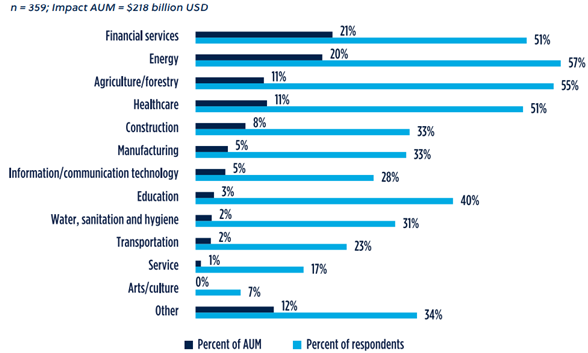
According to the 2025 GIIN State of the Market report, surveyed investors allocated USD 23.98bn to agriculture and forestry. However, the report does not clarify whether nutrition outcomes are tracked within those allocations.
This distinction matters: investing in agriculture or food security does not automatically improve nutrition. Food security focuses on caloric availability. Nutrition security requires consistent access to diverse foods that provide essential nutrients for optimal growth, development, and health.
Populations can achieve caloric sufficiency while remaining nutrition insecure, particularly where diets are dominated by inexpensive, energy-dense staples and ultra-processed foods. This ‘nutrition transition’, increasingly evident in low- and middle-income countries, has coincided with rising diet-related diseases.
At the same time, climate change threatens key crops such as coffee and cocoa, increasing vulnerability for smallholder farmers and global supply chains. Many small-scale farmers cultivate diverse, nutrient-rich crops but struggle to access capital due to perceived risk and low margins.
Unlocking capital for enterprises and agribusinesses that produce, process, and distribute nutrient-dense foods is therefore not merely a development goal—it is a resilience strategy. Catalytic capital and blended finance can play a critical role by absorbing higher risk or accepting below-market returns to crowd in mainstream investors and strengthen nutritious food value chains.
Momentum is building. Across global finance platforms, conversations about systemic risk, resilience, and impact measurement are converging. The next step is embedding nutrition within these frameworks as a financially material investment theme. This is the ambition of ATNi’s Capital4Nutrition workstream, which advances three priorities.
First, strengthening the evidence base for what constitutes a nutrition-sensitive investment by defining the characteristics of businesses and value chains that demonstrably improve diet quality. A structured Delphi process engaging global experts in nutrition and finance is underway to build consensus.
Second, equipping investors with practical tools. ATNi has developed the Impact Investing for Nutrition: Principles for Action and is preparing an investor guide to help identify opportunities, assess risk, and measure nutrition impact consistently.
Third, convening capital providers and ecosystem actors. From Development Finance Institutions and commercial investors to nutrition experts and policymakers, ATNi works to align incentives and strengthen the capital structures required to scale nutrition-focused investment. Recent events include ‘Financing Nutrition for Impact: Scaling Investment through Private Sector Innovation’ at the Africa Food Systems Forum 2025 and ‘Beyond the Plate: Investing in Nutrition to De-risk Food Systems’ at Building Bridges 2025.
Through these efforts, ATNi is helping shift nutrition from a peripheral social concern to a core dimension of sustainable finance. For investors and practitioners seeking to engage in this transition, ATNi’s growing network of investor signatories offers a practical entry point to contribute to advancing nutrition-focused investment at scale.