ATNi works closely with other stakeholders including companies, investors, policy makers and consumer groups, to reshape the world’s food systems.

ATNi employs a three-tiered approach to delivering impact.

We design, produce and deliver robust research, we partner with other like-minded organisations, and we innovate and communicate to influence.

Our impact is also focused on three levels:

  • Systems level – driving markets to empower access to affordable and healthy diets.
  • Product level – ensuring half of companies’ food & beverage sales are derived from ‘healthy’ products.
  • Population level – reducing the prevalence of diet related diseases and improving health for all.
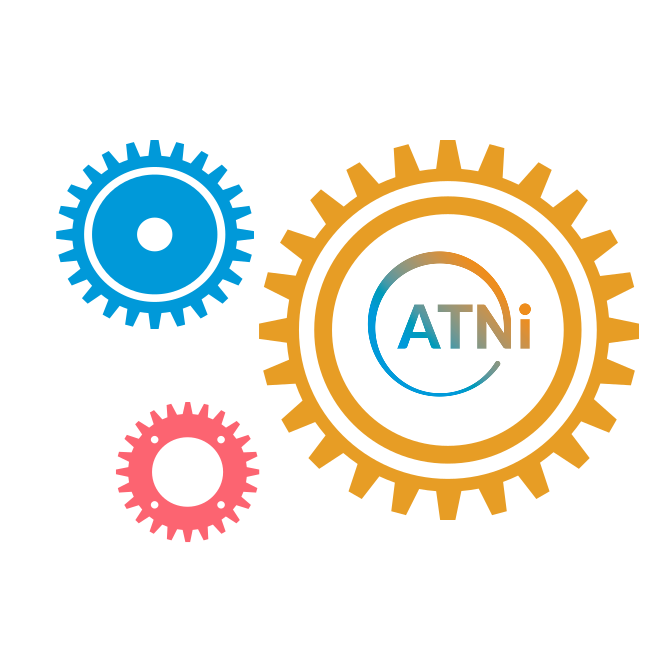
ATNi Wheel
Our Impact

Take a look at our reach

ATNi companies
252
Companies assessed
ATNi products
152,134
Product assessed
ATNi people
900,000,000
Consumers reached
ATNi transforms markets and improves private sector accountability and actions for nutrition. 

ATNi’s strategic goal is to transform markets, so that by 2030, at least half of food and beverage companies’ sales come from healthier products that contribute to healthy, sustainable diets for everyone. 

ATNi actively challenges the food industry, investors and policymakers to shape healthier food systems. We analyse and translate data into actionable insights, driving finance, partnerships and innovations for market transformation so that all people have access to nutritious and sustainable food.

Read about how we work

What we do

In 2013, ATNi was founded as a not-for-profit organization to improve nutrition around the globe by assessing the private sector and driving companies to improve access to nutritious and affordable food. ​Since then, we have worked tirelessly to measure performance and to push for improvement and change. We are proud of the progress made in areas such as marketing to children, but we are pushing for more.

Impact Stories

ATNi’s approach to market transformation is mapped through our theory of change.

2023 saw the launch of an updated strategy and Theory of Change. The five-year strategy will see ATNi continuing to publish its flagship indexes while doubling down on its efforts to engage investors, policy makers and other levers of positive change to speed up progress towards sustained market transformation.


Our Theory of Change

ATNi ToC wheel

“Mechanisms like ATNi exist due to ongoing market failures and inconsistent disclosures. At Danone, we used ATNi to measure our progress on health, one of our corporate objectives, and the company continues to do so. ATNi is a great achievement as a metric for investors.”

– Emmanuel Faber, Chair of the International Sustainability Standards Board (ISSB)Former CEO of Danone.

Businesses are often considered to be part of the nutrition problem – however, we should not underestimate the role the private sector can and must play in ending malnutrition. Through its accountability tools ATNi plays an important role in holding the food and beverage industry to account and encouraging action.”

– Gerda Verburg, Former UN Assistant Secretary General and Coordinator of the  Movement.

For too long, companies have hidden behind the excuse: “We can’t disclose our healthy sales because there’s no consensus on nutrient profiling models (NPMs).” Well, that excuse no longer flies. The ATNi report is crystal clear: there’s now consensus between scientists, investors, and businesses on which NPMs to use.

– Thomas Abrams, Responsible Investment and Health at ShareAction.

Today, I can share that starting with our next non-financial report, we will evolve our nutrition reporting with the following actions…we will complement our existing reporting with new data that is aligned with the scope of the ATNi.


– 
Laurent Freixe, CEO of Nestlé.

email dropdown linkedin facebook twitter icon_input-select BMS Close Download Hamburger Performance Pijl Plus Product-Profile Share google-doc-tracking-XL Performance comparison-tool egagement-tracker-tool