


The Nutrition Paradox: Markets Could Fix Diets, Yet Often Deepen the Problem
13 May 2026The food system is failing half the world. MarketFit Nutrition 2035 aims to fix the market incentives driving it.
Diet-related disease is now the leading cause of preventable death globally. Micronutrient deficiencies affect close to half of all women of reproductive age. And yet, the very markets that could solve this problem are increasingly making it worse—flooding low- and middle-income countries with ultra-processed foods while nutritious options remain out of reach.
This is the paradox that MarketFit Nutrition 2035 is designed to address. Launched by ATNi (the Access to Nutrition initiative) and partners, MarketFit is a multi-country, time-bound initiative with a simple goal: by 2035, more than half of all food and beverage sales in six target countries should come from healthier products. Today, that figure sits at just 34% globally.
The initiative recognises something that decades of nutrition programming have often missed—that behaviour change campaigns and supply-side pilots are not enough when the underlying market incentives remain fundamentally misaligned.
Food companies, driven by short-term profit logic, gravitate towards high-margin, ultra-processed products. Investors don’t price nutrition risk. Regulators lack the data tools to hold industry accountable. Until those structural incentives change, progress will remain fragmented.
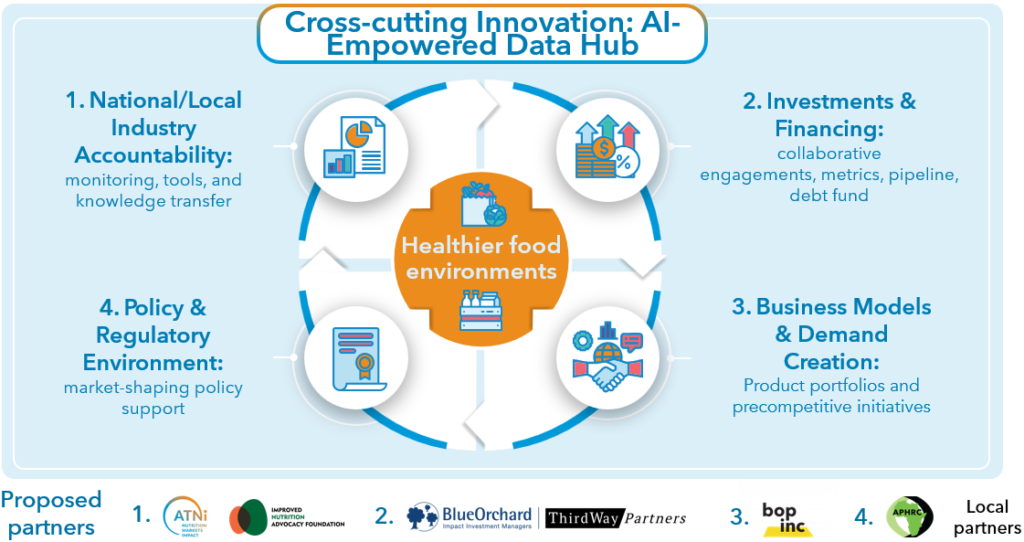
MarketFit operates across four pillars:
1. Building nationally-owned accountability systems to monitor and benchmark food company performance;
2. Mobilising investors and development finance institutions to embed nutrition into capital allocation decisions;
3. Supporting companies to reformulate products and develop business models that reach low-income consumers; and
4. Equipping governments with the evidence and tools needed to design effective market-shaping policies.
Critically, the initiative is not designed to work around governments—it is designed to work through them. In each focus country, MarketFit will be anchored in a national institution, co-designing priorities and ensuring that accountability tools are locally owned and sustained beyond the programme’s lifecycle.
At a moment when official development assistance is contracting and political will for prevention is waning, MarketFit makes a deliberate bet: that reshaping markets through country-level incentives and guardrails is both more durable and more scalable than project-based nutrition interventions. The private sector is not just a problem to be regulated, but to make progress, market incentives need to be re-aligned.
Whether that is achievable remains an open question. What ATNi brings to the table is twelve years of global benchmarking methodology, established relationships with investors and national governments, and a programme design that ties accountability tools to nationally-owned institutions.
The food system isn’t broken. It’s working exactly as its incentives dictate. MarketFit Nutrition 2035 exists to change those incentives.